2026-10-17 ·
When to Seek Professional Help for Mold in North Hills Attics
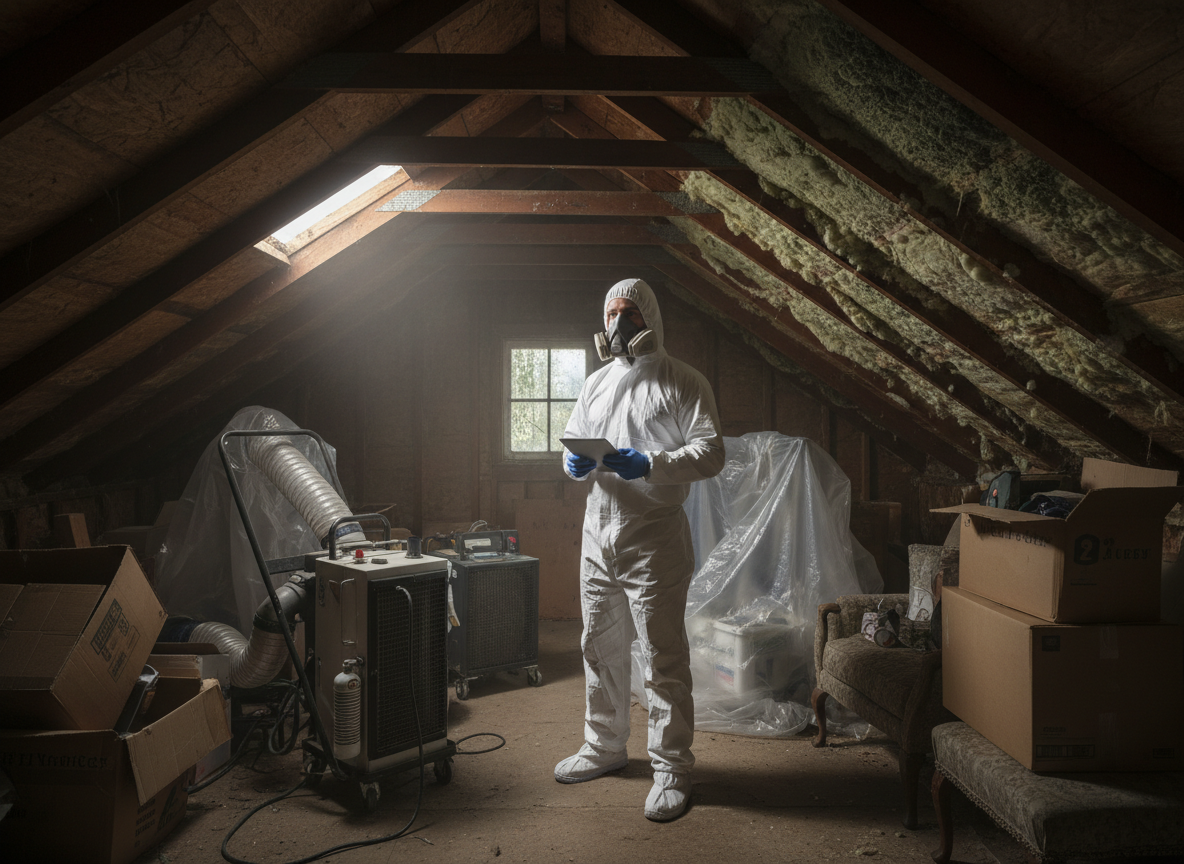
Professional help becomes necessary for mold in North Hills attics once visible growth exceeds a few square feet, musty odors reach living spaces, or residents experience unexplained respiratory irritation that persists after basic ventilation attempts. North Hills East and North Hills West homes built in the 1950s through 1970s commonly feature roof structures with limited airflow that trap moisture from occasional winter rains or morning fog drifting from the Sepulveda Basin. These conditions allow spores to colonize insulation and rafters long before homeowners notice ceiling stains or allergy flares.
Visible Growth and Water Damage Patterns
Attic mold in North Hills often appears as black or greenish patches along roof sheathing near plumbing vents or where roof leaks have occurred around older asphalt shingles. Homeowners who climb into the attic space may also spot water-stained rafters or sagging insulation batts that feel damp to the touch even during the dry summer months typical of the hot-summer Mediterranean climate. When these signs extend beyond isolated spots or reach into wall cavities shared with living areas, DIY cleaning risks spreading spores through HVAC ducts that serve Panorama City and Granada Hills homes nearby. Professional inspection identifies hidden colonies behind insulation that surface cleaning misses.
Odor and Health Signals Specific to Local Homes
A persistent earthy or musty smell in upstairs rooms often traces back to attic mold growth fueled by condensation during the cooler nights that follow hot summer days in North Hills. Residents report increased sinus congestion, coughing, or skin irritation that improves when they leave the house for several hours, pointing to elevated spore levels circulating through ceiling registers. In older North Hills housing stock, poor attic ventilation combined with original fiberglass insulation allows moisture from bathroom exhaust fans to linger rather than escape. When symptoms affect multiple household members or worsen after rain events, testing through attic mold testing and removal confirms whether concentrations exceed safe thresholds before remediation begins.
Climate and Housing Factors in North Hills
The hot-summer Mediterranean climate brings intense daytime heat that drives warm air into attics, followed by cooler evenings that create condensation on uninsulated roof decks in North Hills East and North Hills West. Many single-story ranch homes here lack ridge vents or powered fans, allowing humidity to build during the dry season when evaporative cooling units add extra moisture. Proximity to the Sepulveda Basin increases overnight fog frequency compared with inland pockets of Van Nuys, accelerating mold on wood framing. These local realities mean surface treatments alone rarely resolve the problem; source moisture and airflow issues require targeted repairs that mold remediation near me crews address after proper containment.
When to Schedule Professional Assessment
Schedule assessment after discovering water intrusion from roof repairs, noticing dark discoloration on ceiling drywall, or experiencing allergy symptoms that align with attic access. In North Hills, waiting until mold covers more than ten square feet or penetrates multiple insulation layers increases both remediation scope and potential structural damage to rafters. A qualified team evaluates airflow, insulation condition, and any prior leaks common in homes near Nordhoff Street before recommending containment and removal steps. Linking this evaluation to the patterns discussed in Mold Issues Common in Older North Hills Housing Stock helps owners understand how their specific property fits regional trends and when prompt action prevents larger issues.