2026-10-17 ·
How to Spot Hidden Mold After Winter Rains in North Hills Homes
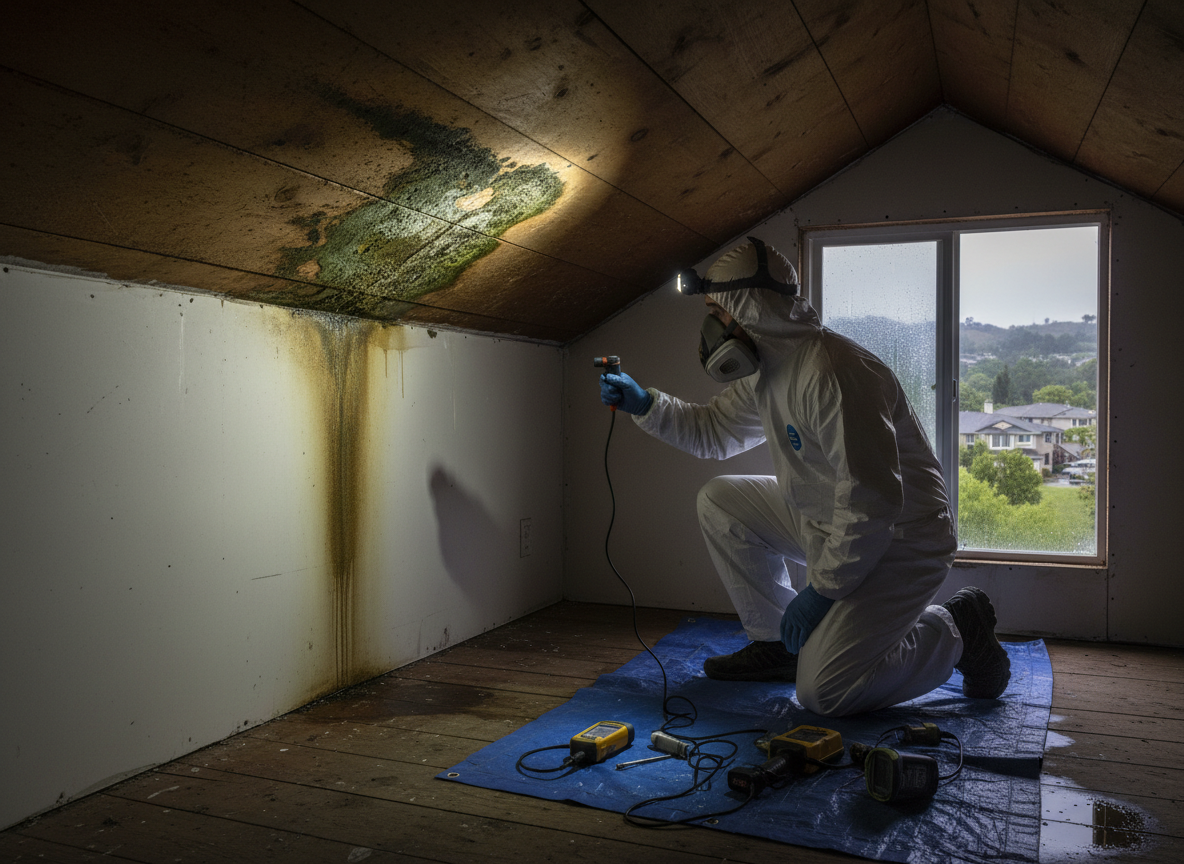
After winter rains in North Hills, hidden mold typically shows up first in attics and crawl spaces of homes built before 1980 within 48 to 72 hours when moisture is trapped behind insulation or under flooring.
Checking Attics for Moisture Damage
North Hills East and North Hills West homes often have vented attics that collect condensation after the wet season ends. Walk through the space with a flashlight and look for dark streaks on rafters or insulation that feels damp to the touch. Pay attention to areas around bathroom exhaust fans and roof penetrations where rainwater can enter through small gaps. In the hot-summer Mediterranean climate, dry summers usually follow, but trapped water from December through February rains stays long enough to support growth on wood and drywall. Check for musty odors that intensify when you disturb insulation. Homes near Sepulveda Basin face extra humidity from the basin floor that slows drying. If you find discolored spots larger than a quarter, note their location and move to the next area rather than disturbing the material yourself.
Inspecting Crawl Spaces and Foundations
Crawl spaces under North Hills homes built on raised foundations trap water that seeps in from saturated soil after heavy winter storms. Shine a light along the perimeter and look for white or black fuzzy patches on joists and subflooring. Older properties in Panorama City and Granada Hills frequently have dirt floors without vapor barriers, which allows ground moisture to rise and condense on cold pipes. Measure any standing water depth and note whether it reaches within six inches of wood framing. Use a moisture meter on sill plates if available; readings above 16 percent indicate conditions that support mold. Ventilation openings near North Hills Park can bring in outside air that carries spores, making these spaces especially vulnerable once rains stop.
Examining Interior Walls and Windows
Water from winter rains often travels down exterior walls in North Hills West homes and appears as bubbling paint or soft drywall near window sills. Press gently on walls adjacent to downspouts and look for spongy spots that give under light pressure. Check corners where two exterior walls meet, as these areas collect runoff from roof valleys. In Van Nuys and surrounding neighborhoods, stucco homes from the 1960s and 1970s develop hairline cracks that let moisture reach the paper backing of drywall. Run your hand along baseboards in bedrooms and living rooms for cool, damp sections that signal hidden growth behind the trim. Document any discoloration with photos before deciding on next steps.
Knowing When Professional Testing Helps
If visible signs appear in multiple rooms or odors persist after fans run for several days, schedule a mold inspection to identify the full extent. Properties near the Sepulveda Basin and in North Hills East often need targeted air sampling because spores travel through HVAC ducts. Review the article Mold Issues Common in Older North Hills Housing Stock for details on construction types that trap moisture longest. When growth covers more than ten square feet or sits inside wall cavities, water damage mold remediation becomes necessary to remove affected materials safely. The post When to Seek Professional Help for Mold in North Hills Attics outlines clear thresholds for calling in equipment rather than relying on household fans alone.