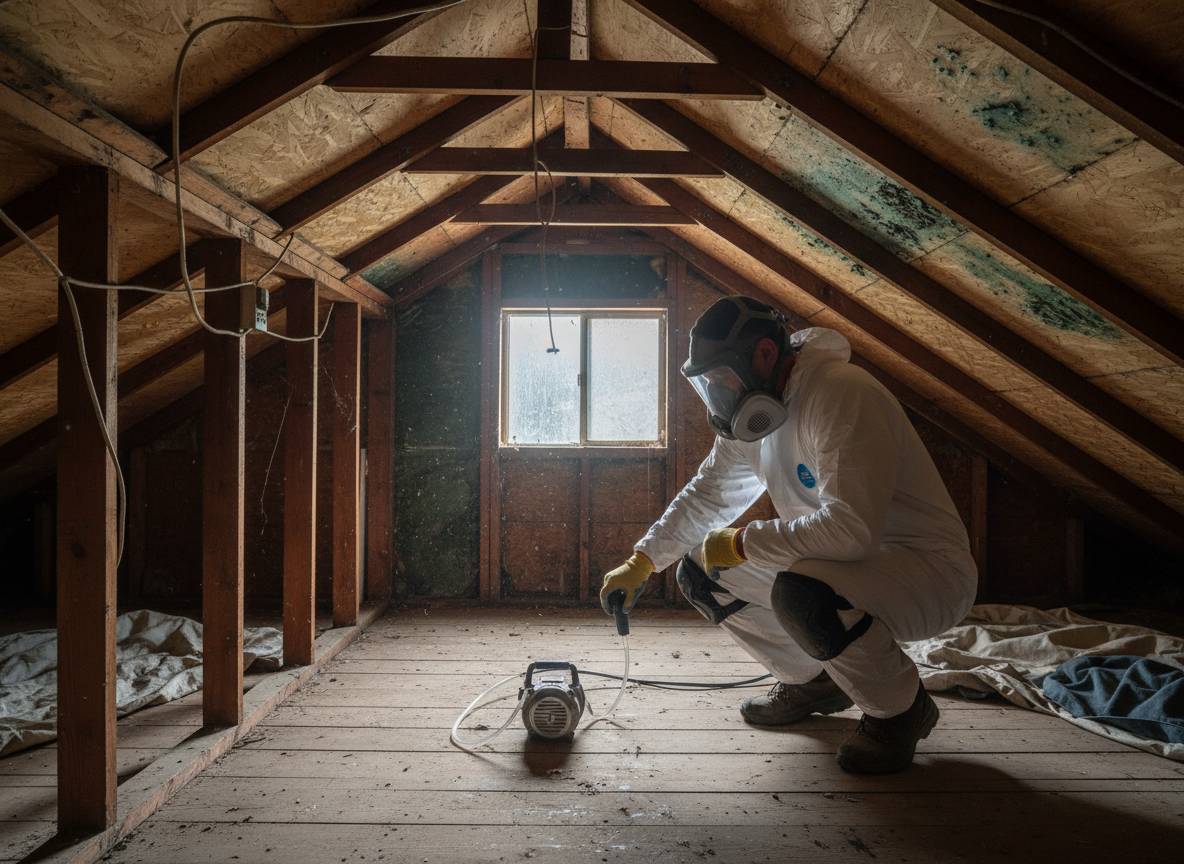
North Hills sits in a hot-summer Mediterranean climate where dry summers often mask moisture issues that develop after winter rains or from irrigation near the Sepulveda Basin. Homes in North Hills East and North Hills West, many built between the 1950s and 1970s, feature slab foundations and limited crawl spaces that trap humidity. During inspection we check behind drywall, under sinks, and around window frames where stucco cracks allow water to enter unseen. Los Angeles County building practices from that era frequently omitted modern vapor barriers, so we test concrete moisture levels and attic ventilation to catch hidden growth before it spreads to nearby Van Nuys or Panorama City properties.
Mold inspection here requires checking for condensation on metal ductwork during the brief humid periods that follow Santa Ana winds. We use moisture meters on plaster walls common in Granada Hills border homes and look for staining around HVAC returns that pull air from the basin. Edge cases include mold behind kitchen tile backsplashes where older plumbing leaks meet poor ventilation. We also examine exterior grading around North Hills Park homes where runoff pools against foundations during rare downpours. Sampling focuses on air and surface swabs only after visual and meter evidence points to likely growth locations.
Inspectors must account for the county's seismic retrofitting that added new penetrations in many North Hills walls, creating fresh pathways for moisture. We document every accessible area with photos and notes on materials such as original hardwood floors or acoustic ceiling tiles that absorb water differently. Homeowners in North Hills West often overlook mold in detached garages converted to living space, where slab edges meet soil. Our reports include exact locations, species likelihood based on local conditions, and clear next steps without assuming remediation work.
The process respects 24/7 scheduling from our base at 15650 Nordhoff St so residents can address urgent concerns after leaks. We never open walls without permission and always explain findings in plain language tied to the specific construction details of each North Hills neighborhood.
Technician insight
In North Hills, the thing that catches most people out with Mold Inspection is how homes built on slabs near the Sepulveda Basin hold moisture from winter rains long after our dry summers return, especially where original 1960s grading lets water sit against the foundation.
North Hills East Slab Moisture
A resident in North Hills East reported a musty smell after winter rain. Inspection found elevated moisture along the slab edge facing the basin where grading had settled. Meters confirmed damp concrete under carpet; samples were taken from the affected baseboard area. The report mapped exact locations and outlined targeted drying steps.
How it works
- 1
Initial Consultation
Discuss visible signs, home age, and any recent water events near the Sepulveda Basin or North Hills Park.
- 2
Visual Walkthrough
Examine all accessible rooms, attics, and crawl spaces in North Hills East and West properties for discoloration and musty areas.
- 3
Moisture Mapping
Use meters on walls, floors, and concrete slabs common in 1950s-1970s Los Angeles County homes to locate hidden dampness.
- 4
Targeted Sampling
Collect air or surface samples only where meter readings and visual clues indicate likely growth.
- 5
Detailed Report
Provide written findings with photos, locations, and recommendations specific to the property's construction and local climate.
Pricing
Upfront quotes based on square footage, access difficulty, and number of samples required for typical North Hills homes.