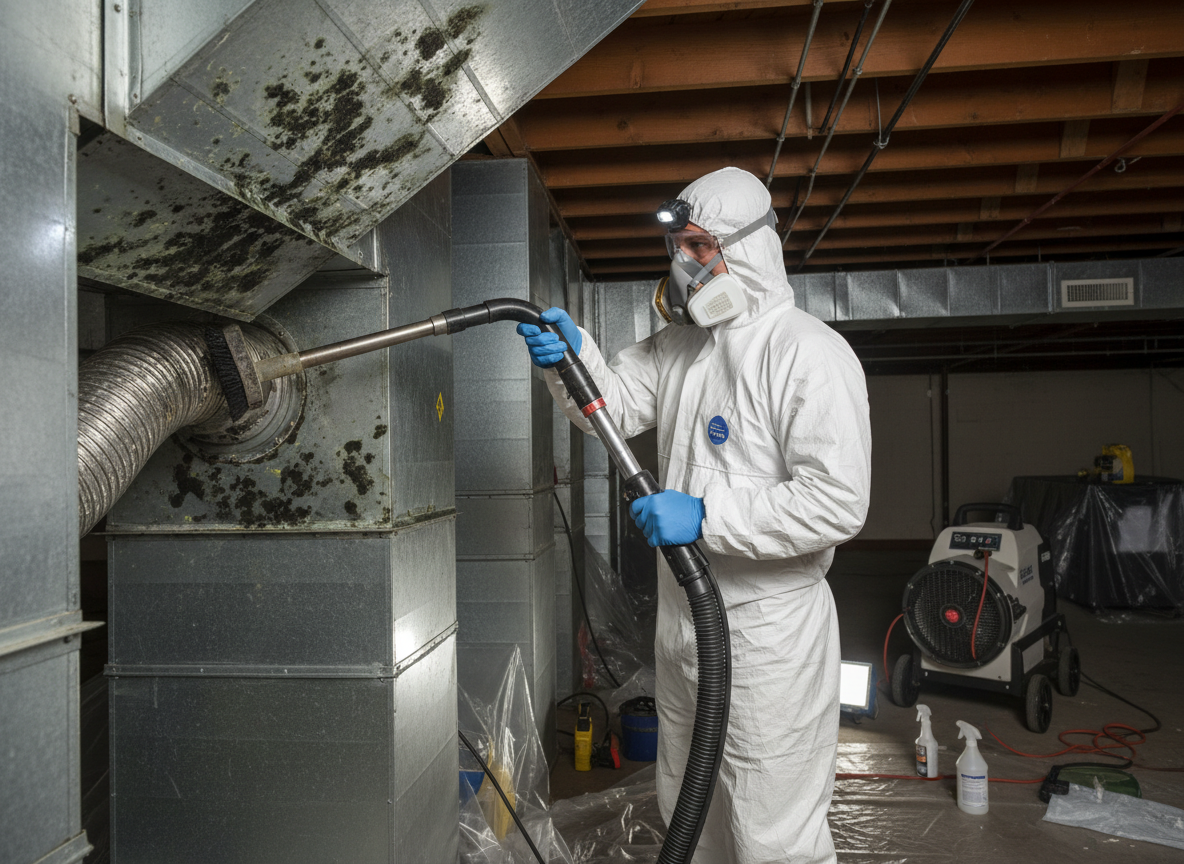
Ventilation systems in North Hills homes built from the 1950s through the 1970s often run through attics and crawl spaces where temperature swings create condensation inside metal ducts. In North Hills East and North Hills West, many single-story tract houses still use original flex duct or lined sheet metal that traps spores when the AC cycles during hot summer days. Remediation requires isolating the system, removing contaminated insulation, and cleaning coils and registers without spreading particles into living spaces. Homeowners near Sepulveda Basin frequently discover the issue only after musty odors appear when the system restarts in fall.
Dry summers in Los Angeles County reduce outdoor humidity yet keep indoor AC units running long hours, so moisture collects on cold duct surfaces and feeds hidden growth. Crews working from 15650 Nordhoff St begin by mapping every branch run with cameras, then seal off affected zones with negative air machines before any cutting or removal. In Panorama City and Granada Hills homes, we often find mold inside the main trunk line near the air handler because those units sit in garages that stay warmer than the cooled air passing through. Proper disposal of contaminated flex and reinstallation of new lined duct prevents recurrence when the next heat wave arrives.
Code requirements in the area call for proper sealing of new duct joints and insulation to R-8 minimum in unconditioned spaces. We inspect for gaps that pull air from crawl spaces or attics where soil moisture from occasional winter rains can reintroduce spores. Edge cases include shared walls in duplexes along Nordhoff Street where one unit’s contaminated return can affect the neighbor, requiring coordinated work on both systems. Homeowners should never run the fan during visible mold events, as that spreads particles throughout the house before remediation starts.
Technician insight
In North Hills the thing that catches most people out with ventilation mold remediation is the original flex duct runs in 1960s homes around North Hills Park that sit right above the AC coil. Dry summers mask the condensation until the first cool night, then the smell hits when the system kicks on. Homeowners often try to change filters themselves and spread spores through the return before we arrive.
Hidden Growth in Garage Air Handler
A North Hills West homeowner noticed musty air from vents after a long AC run. We traced the source to the air handler in the attached garage where condensation had soaked the liner. The main trunk feeding bedrooms contained visible mold along the bottom seam. We isolated the system, removed the liner and two flex runs, cleaned the coil, and reinstalled sealed ductwork. Post-clearance testing showed levels returned to outdoor baseline.
How it works
- 1
Initial Containment and Inspection
We set up negative air at every register and use inspection cameras to locate growth inside ducts serving North Hills East and West homes.
- 2
Source Removal
Contaminated flex, insulation, and coil sections are cut out and bagged on site before any cleaning begins.
- 3
Surface Cleaning and Treatment
Remaining duct interiors are agitated and HEPA vacuumed, then treated with EPA-registered antimicrobial solutions safe for HVAC use.
- 4
Reassembly and Verification
New sealed duct sections are installed, the system is balanced, and post-remediation air samples confirm clearance before the home is reopened.
Pricing
Cost depends on the number of runs affected, accessibility of the air handler, and whether flex or rigid duct must be replaced.