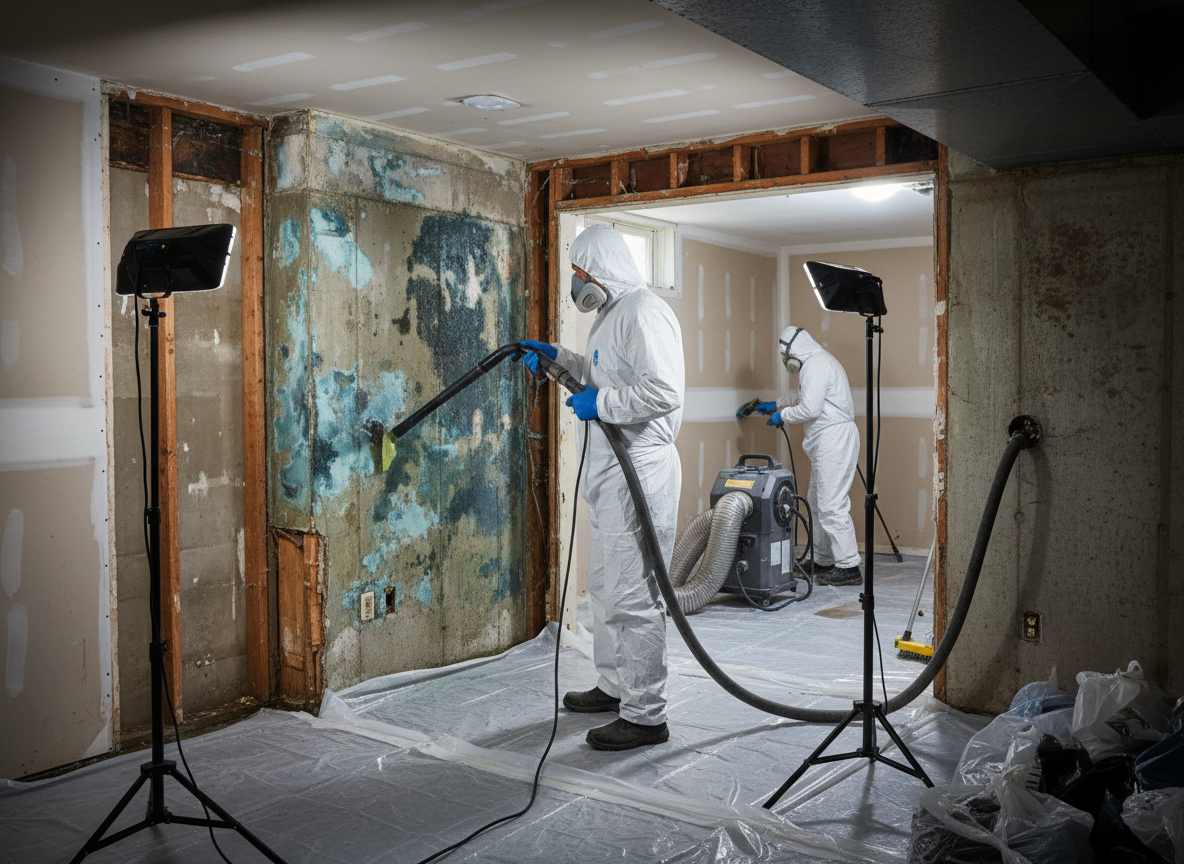
North Hills sits in a hot-summer Mediterranean climate where dry summers mask earlier moisture intrusion from winter rains or irrigation near Sepulveda Basin. Many homes in North Hills East and North Hills West were built between the 1950s and 1970s with stucco exteriors and minimal crawl-space ventilation. When leaks occur around windows or roof penetrations, mold colonies often establish behind drywall or under flooring before residents notice musty odors. Removal requires isolating the affected rooms, HEPA filtration, and physical removal of porous materials rather than surface treatments alone.
Los Angeles County building practices from that era frequently used paper-faced gypsum board directly over framing without vapor barriers. In Panorama City and Granada Hills border properties, shared lot lines and mature landscaping keep soil moisture against foundations year-round. Technicians must check HVAC ducts that run through attics, because spores travel easily through the system once disturbed. Containment barriers and negative air machines prevent cross-contamination to unaffected living spaces during demolition and disposal.
After physical removal, remaining wood framing and concrete are treated with EPA-registered antimicrobials labeled for porous surfaces. Clearance testing follows, using both air and surface sampling to confirm spore counts have returned to outdoor baseline levels typical for the San Fernando Valley. Homeowners receive a written scope that lists every removed material and the exact locations addressed so future inspectors can reference the work.
Technician insight
In North Hills, the thing that catches most people out with toxic mold removal is older stucco homes in North Hills West where the slab edge sits right against irrigated landscaping near North Hills Park. Summer heat dries the surface fast, so owners assume the leak stopped, but the paper backing on the drywall stays damp for months until we open the wall.
Hidden growth behind bathroom vanity in North Hills East
A homeowner noticed a persistent musty smell after a slow toilet leak. Inspection showed the vanity base had wicked moisture into the drywall and subfloor. We contained the bathroom, removed the vanity and affected sections, treated the joists, and dried the cavity. Clearance samples matched outdoor levels and the home was returned to normal use.
How it works
- 1
Initial Assessment
Technician inspects North Hills property for visible growth, moisture readings, and hidden cavities using infrared imaging and moisture meters.
- 2
Containment Setup
Plastic barriers and negative air machines isolate the work zone to prevent spores from spreading to other rooms or HVAC systems.
- 3
Removal and Cleaning
Affected drywall, insulation, and trim are removed; remaining surfaces are HEPA-vacuumed and treated with antimicrobial solutions.
- 4
Drying and Verification
Dehumidifiers and air movers dry the structure; post-remediation air and surface samples confirm levels match outdoor baselines.
- 5
Documentation Handover
Written report details materials removed, locations treated, and any recommendations for preventing recurrence in local climate conditions.
Pricing
Pricing varies by extent of hidden growth and square footage affected; most North Hills jobs require removal of at least one wall or floor section.