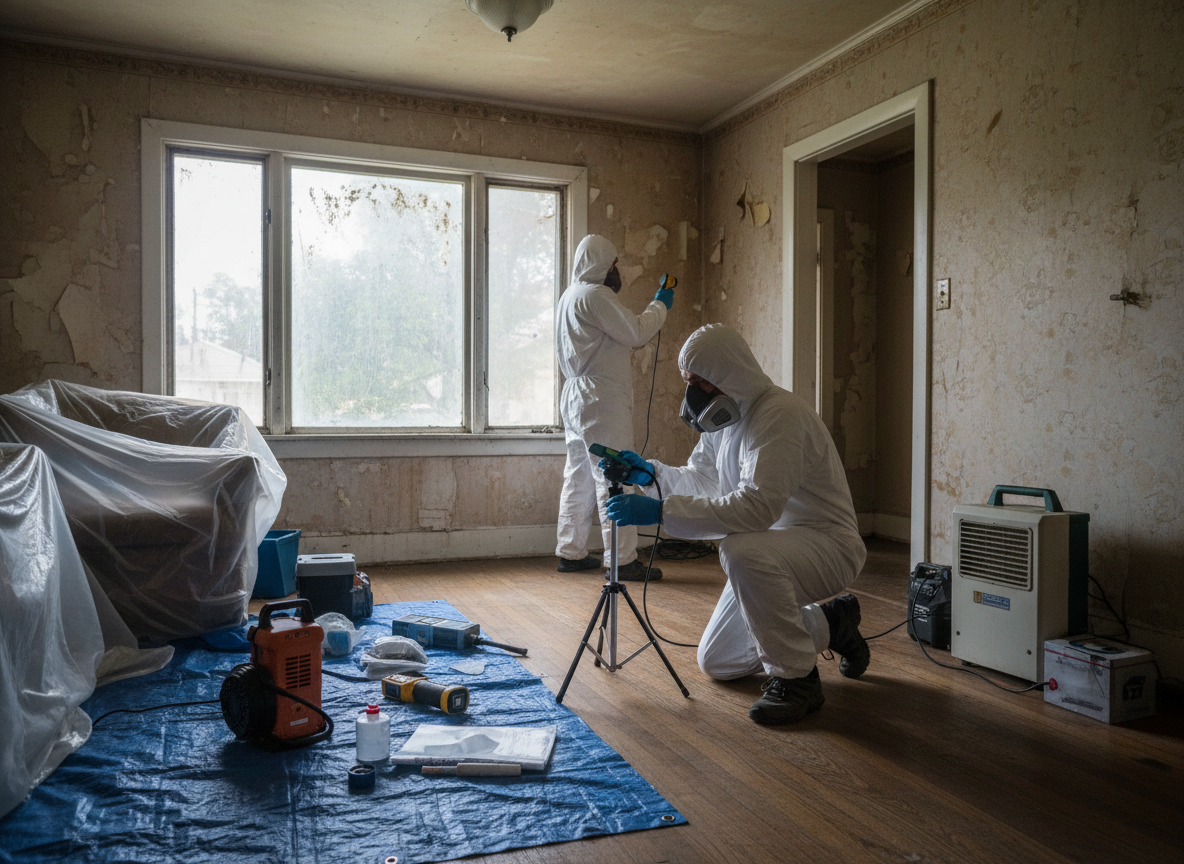
North Hills homes, especially those in North Hills East and North Hills West built before the 1990s, often feature stucco exteriors and raised foundations that trap moisture from occasional winter rains despite the dry summers typical of the Los Angeles hot-summer Mediterranean climate. Residential mold testing here requires air and surface sampling in attics, crawlspaces, and around plumbing penetrations near Sepulveda Basin where humidity lingers longer than in drier inland spots. Technicians from our base at 15650 Nordhoff St account for wind-driven moisture patterns that push spores into wall cavities during Santa Ana events, something generic tests miss.
Testing protocols must address Los Angeles County building codes that require documentation of moisture sources before any remediation plan. We collect samples from multiple zones including HVAC returns and bathrooms, then send them to accredited labs for species identification. This matters in areas like Panorama City and Granada Hills where older single-story ranch homes share similar slab-on-grade construction that can hide leaks under carpets or behind cabinets for months before visible signs appear.
Homeowners in North Hills often request testing after noticing odors following heavy rains or after a neighbor's remediation project. Proper sampling distinguishes between normal outdoor spore levels common near the basin and true indoor amplification. Reports include chain-of-custody details and recommendations tied to actual site conditions rather than blanket advice, helping residents decide next steps without unnecessary work.
Technician insight
In North Hills, the thing that catches most people out with Residential mold testing is assuming dry summer weather means no hidden moisture when older homes near North Hills Park sit on clay-heavy soil that holds winter rain for months under slabs.
Musty Odor After Winter Leak
Homeowner in North Hills West noticed persistent odor in a bedroom after a roof leak. Sampling revealed elevated aspergillus in the wall cavity connected to the bathroom plumbing. Targeted air and surface tests confirmed the source without widespread disturbance. The report allowed precise follow-up work and cleared the rest of the house.
How it works
- 1
Site Walkthrough
Technician inspects all accessible areas of the North Hills residence, noting water stains, musty odors, and construction details common to local housing stock.
- 2
Sample Collection
Air, surface, and bulk samples are taken from suspect zones including crawlspaces and HVAC systems using calibrated equipment suited to the dry summer baseline.
- 3
Laboratory Analysis
Samples are sent to an independent lab for mold identification and spore count comparison against outdoor controls from the North Hills area.
- 4
Detailed Report Delivery
Findings are compiled into a written report with photos, lab results, and location-specific observations delivered within days.
Pricing
Cost depends on square footage, number of samples, and access difficulty in older North Hills homes; upfront quotes provided after initial discussion.