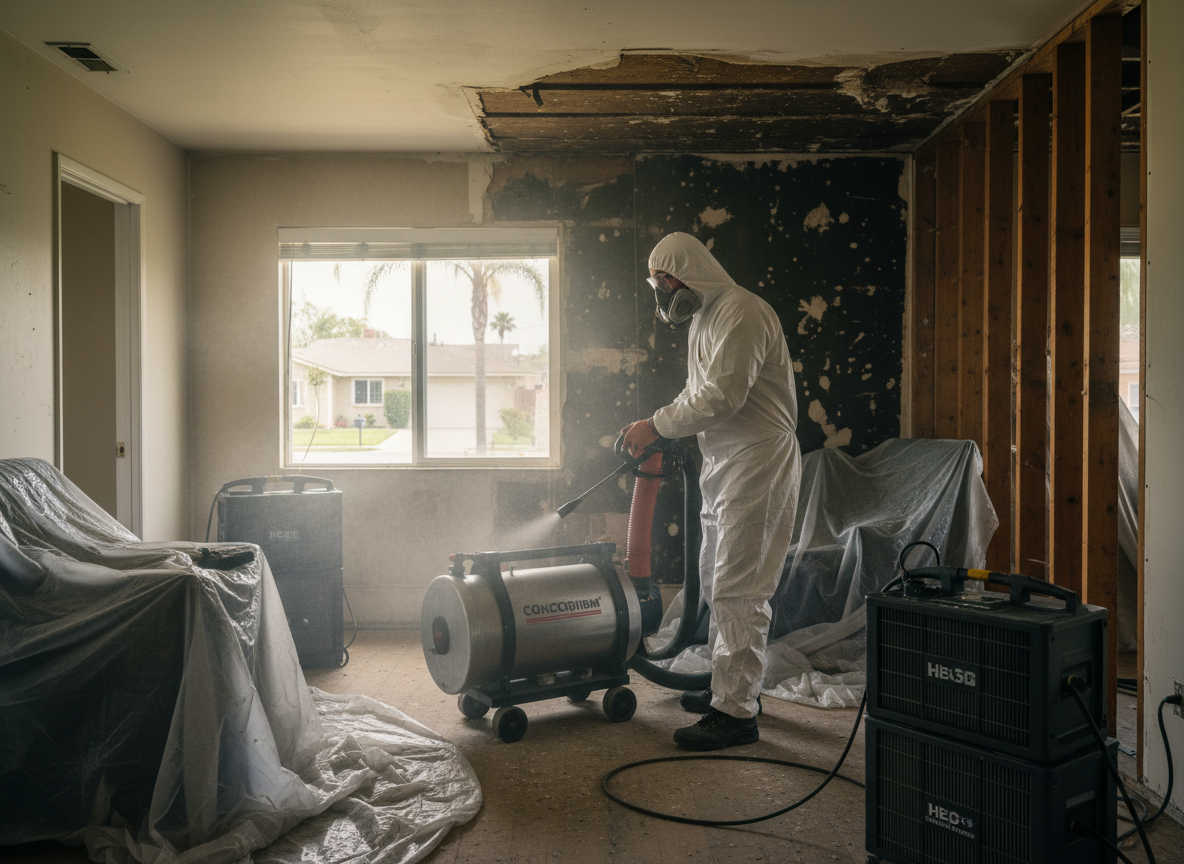
Mold odors often persist in North Hills homes even after visible growth is addressed because spores and mycotoxins embed in porous materials like drywall, carpet padding, and insulation common in the area's post-war housing stock. The hot-summer Mediterranean climate brings dry summers that reduce surface moisture yet allow hidden dampness from irrigation runoff or poor drainage near the Sepulveda Basin to feed colonies behind walls. Effective odor removal requires HEPA air scrubbing combined with hydroxyl generators and targeted antimicrobial fogging rather than simple ozone treatments that can damage finishes in Granada Hills and Panorama City properties.
Technicians working in North Hills East routinely encounter odor issues tied to slab leaks or roof penetrations that homeowners miss during the long dry season. Proper protocols include negative air pressure containment to prevent cross-contamination into adjacent living spaces, followed by removal of affected materials and application of encapsulants rated for porous substrates. Van Nuys and Panorama City jobs frequently involve attic insulation replacement because cellulose materials trap odors that migrate downward through ceiling cavities during temperature swings.
Verification after odor removal includes post-treatment air sampling and olfactory inspection in multiple zones, especially around North Hills Park where older single-story homes have limited ventilation. Homeowners should avoid sealing surfaces before source removal because trapped moisture reactivates colonies during the next wet period. This approach keeps remediation focused on actual conditions rather than cosmetic masking in Los Angeles County properties.
Technician insight
In North Hills, the thing that catches most people out with odor removal mold is how the dry summers let homeowners ignore slow leaks from irrigation or slab edges near the Sepulveda Basin until smells migrate through North Hills West stucco walls and older insulation.
Persistent Musty Odor After Minor Leak
Homeowner in North Hills East reported a musty smell weeks after a small roof drip. Inspection revealed saturated cellulose insulation in the attic that had wicked moisture into ceiling cavities. Containment and material removal plus hydroxyl treatment cleared the odor without affecting nearby rooms.
How it works
- 1
Initial Assessment
Inspect affected rooms, test air quality, and identify moisture sources tied to local drainage patterns near the Sepulveda Basin.
- 2
Containment Setup
Establish negative pressure barriers to isolate the work area and prevent spore spread into unaffected North Hills West spaces.
- 3
Source Removal and Treatment
Remove contaminated porous materials, apply antimicrobial agents, and run air scrubbing equipment until odors are eliminated.
- 4
Final Clearance
Conduct air sampling and sensory checks before restoring the space for safe occupancy.
Pricing
Cost depends on the size of affected areas, depth of material penetration, and access challenges common in North Hills crawl spaces and attics.