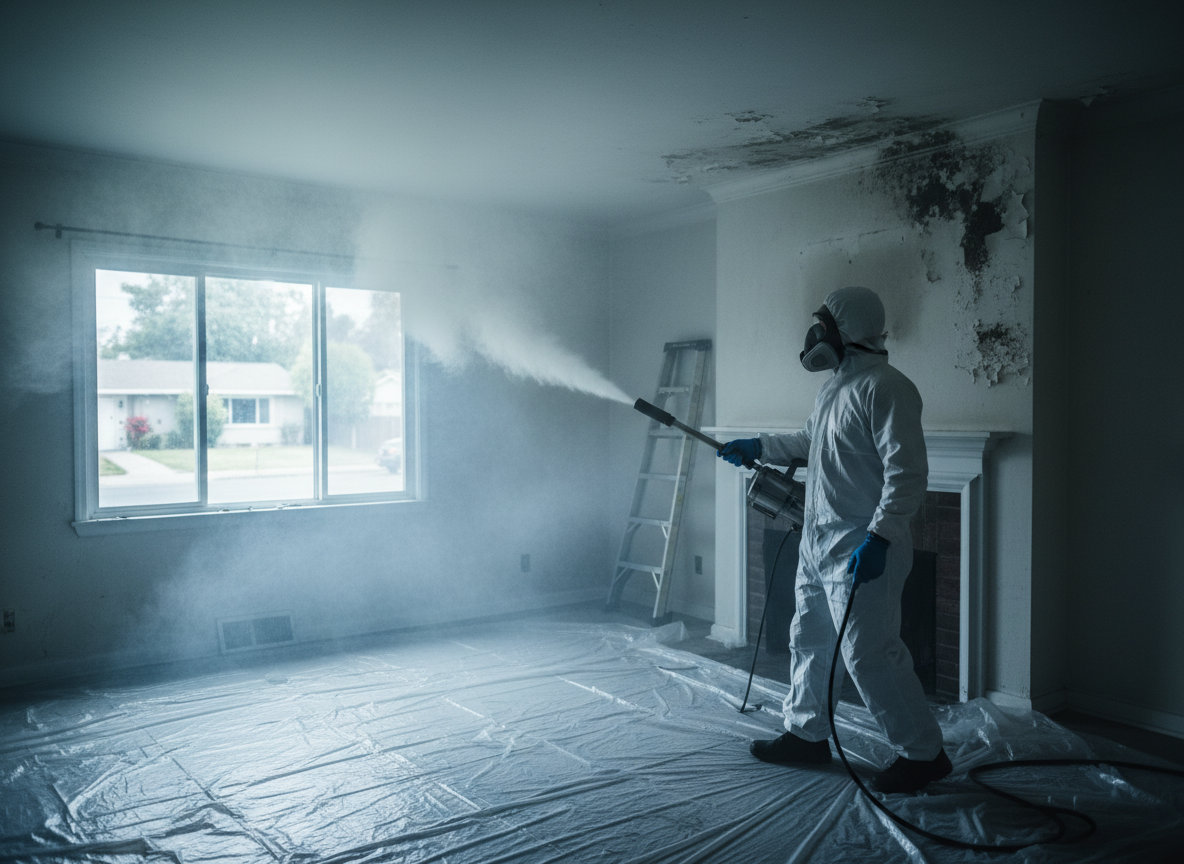
Mold fogging treatment disperses EPA-registered antimicrobials as a fine mist that penetrates cracks, behind baseboards, and into HVAC returns common in North Hills East ranch homes. The hot-summer Mediterranean climate keeps summers dry, yet winter rains and irrigation near Sepulveda Basin often create hidden damp pockets that fogging addresses without demolition when caught early. Technicians mask and protect porous materials like original 1960s plaster before application, then ventilate to safe levels before re-entry.
In North Hills West, many homes sit on flat lots where poor grading sends runoff toward foundations during rare heavy rains, allowing mold to colonize under subfloors. Fogging reaches these voids after source correction but requires pre-testing to confirm the species and post-treatment air sampling to verify clearance. Crews from 15650 Nordhoff St carry equipment sized for single-story tract homes typical here rather than high-rises in downtown Los Angeles.
Dry summers in Panorama City and Granada Hills reduce visible surface growth, yet residents often overlook AC condensate lines that drip inside walls. Fogging these cavities demands low-residue formulas to avoid affecting nearby electronics or fabrics. The process always follows moisture mapping so fog reaches only confirmed problem zones, preventing unnecessary chemical use in unaffected rooms.
Technician insight
In North Hills, the thing that catches most people out with mold fogging treatment is assuming dry summer air means the job is simple; older North Hills East homes near the basin still hold winter moisture behind stucco that fog alone won't fix without first stopping the leak.
Hidden Growth Behind HVAC in North Hills West
A homeowner noticed musty odors near the return vent but no visible mold. Inspection found condensation inside the duct chase from years of AC use. We contained the room, fogged the cavity and duct interior, then cleared the system. Odors disappeared and follow-up sampling showed levels below action thresholds.
How it works
- 1
Initial Assessment
Inspect affected rooms, HVAC, and crawl spaces using moisture meters and borescopes to map extent before any fogging begins.
- 2
Containment Setup
Isolate treatment zones with plastic sheeting and negative air to keep fog from drifting into clean areas of the North Hills home.
- 3
Fog Application
Apply antimicrobial fog at calibrated droplet size to penetrate cracks and porous surfaces while protecting occupants and pets.
- 4
Ventilation and Clearance
Air out treated spaces, then conduct post-treatment sampling to confirm mold levels meet safe standards before full re-occupancy.
Pricing
Cost depends on square footage treated, HVAC involvement, and whether source moisture repairs are needed first; upfront quotes provided after inspection.