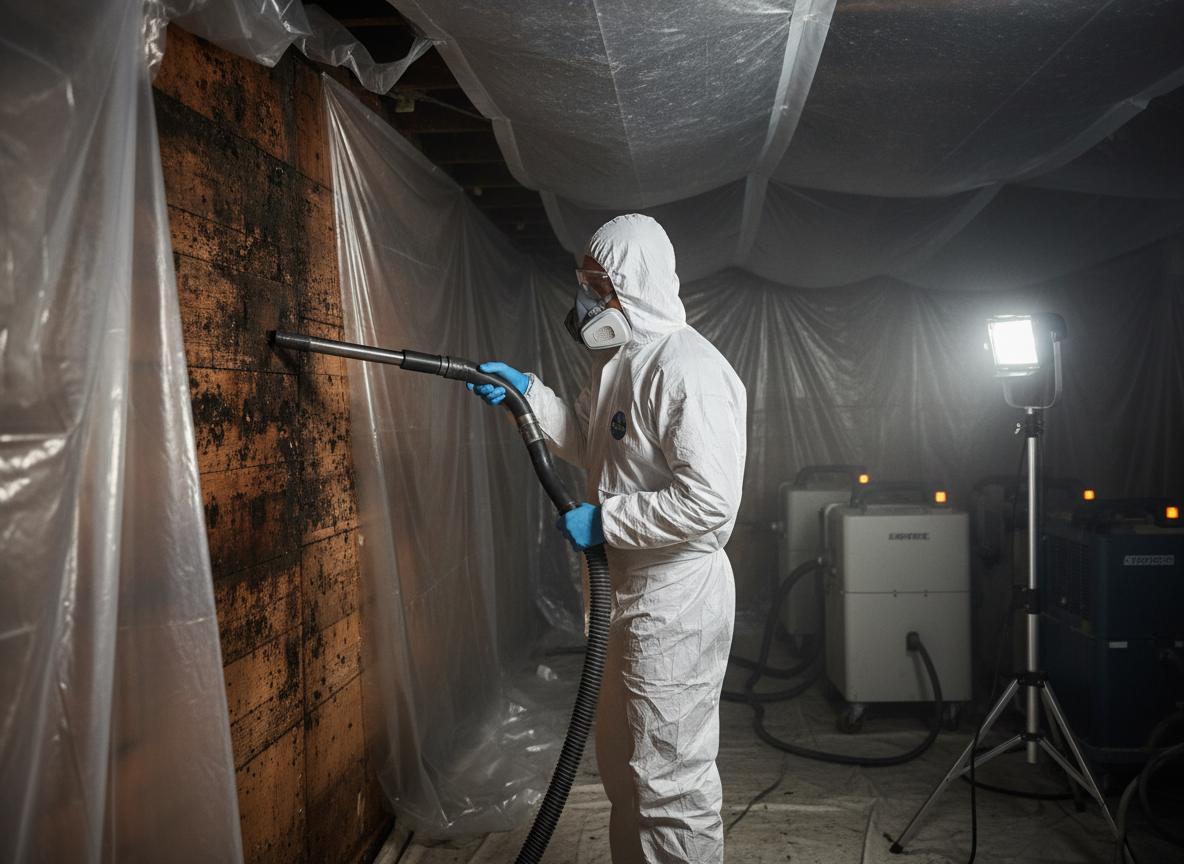
North Hills sits in a hot-summer Mediterranean climate where dry summers push residents to run air conditioning constantly, creating condensation behind walls in homes built from the 1950s onward in North Hills East and North Hills West. This hidden moisture often feeds mold on drywall, insulation, and subfloors near plumbing runs or under slab foundations common in the area. Abatement work here requires cutting back to sound material rather than surface cleaning because spores travel easily through the open floor plans typical of these single-story ranch houses.
Properties close to Sepulveda Basin experience slightly higher ambient humidity during winter rains, which can push water under stucco siding or into crawl spaces that lack proper vapor barriers. When mold abatement crews open walls in Granada Hills or Panorama City border homes, they frequently find growth extending into HVAC ducts that were installed without proper sealing decades ago. Containment must be tight because negative air machines can pull spores from neighboring units in attached garages or shared attics found throughout Van Nuys-adjacent blocks.
Los Angeles County building codes require proper disposal of contaminated materials and documentation of moisture sources before any reconstruction. Crews working from the 15650 Nordhoff St base respond at any hour because a burst pipe on a weekend can saturate drywall within hours in these older homes. Every job includes locating the water entry point first, whether it is a roof valley, window flashing, or leaking sewer line under the slab, since simply removing visible mold without fixing the source leads to rapid return growth during the next rain event.
Technician insight
In North Hills the thing that catches most people out with mold abatement is how far growth travels behind the stucco and into the slab-edge insulation on 1960s homes near North Hills Park. A small bathroom leak can reach the living room subfloor because the original slab has no vapor barrier and the dry summers keep the AC running, pushing condensation exactly where homeowners never look.
Hidden Growth Behind Kitchen Cabinets
A homeowner in North Hills West noticed a musty smell after heavy winter rain. Inspection revealed a slow leak at the kitchen sink had saturated the particleboard cabinets and traveled under the vinyl flooring into the adjacent hallway. Crews removed the lower cabinets, cut back drywall two feet past visible mold, cleaned the subfloor, and dried the area for three days before clearance.
How it works
- 1
Initial Assessment
Technicians inspect affected rooms, check moisture levels in walls and floors, and identify the water source using meters and thermal imaging while protecting unaffected areas.
- 2
Containment Setup
Plastic barriers and negative air machines isolate the work zone to prevent spores from spreading into living spaces or HVAC systems common in North Hills homes.
- 3
Removal and Cleaning
Contaminated drywall, insulation, and other porous materials are removed, surfaces are HEPA vacuumed and treated, and air is scrubbed until clearance testing confirms safe levels.
- 4
Drying and Verification
Dehumidifiers and air movers dry the structure, followed by final moisture checks and third-party verification before any rebuilding begins.
Pricing
Cost depends on the size of the affected area, how many rooms require wall opening, and whether HVAC cleaning is needed.