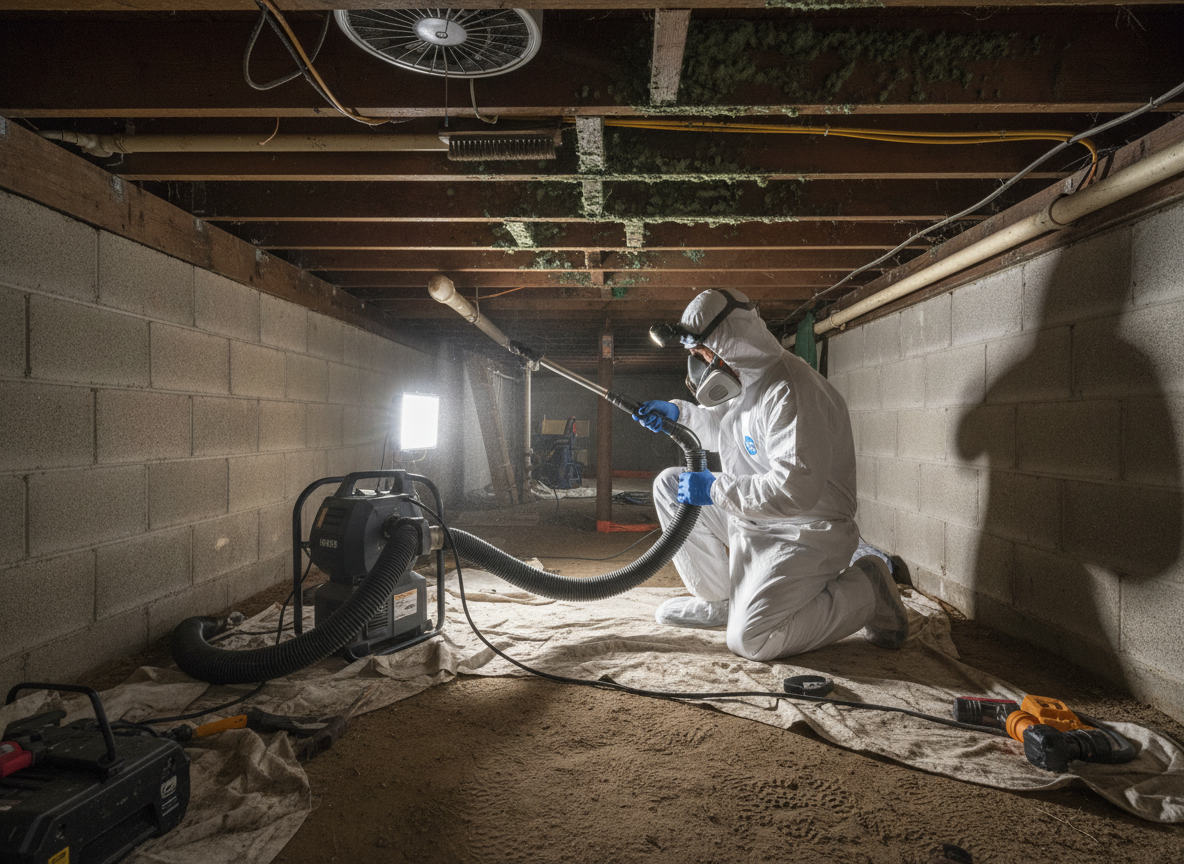
Crawl spaces in North Hills East and North Hills West homes, many built in the mid-20th century, trap humidity despite the hot-summer Mediterranean climate with its dry summers. Irrigation around properties near Sepulveda Basin and in adjacent areas like Van Nuys or Panorama City often introduces moisture that homeowners overlook until musty odors or respiratory issues appear. Removing mold here requires sealing vapor barriers, improving ventilation, and treating wood framing without disturbing nearby Granada Hills terrain drainage patterns.
Los Angeles County building practices for these ranch-style houses frequently leave crawl spaces with minimal access and poor grading, allowing condensation to form on pipes and joists during cooler nights after hot days. Technicians must navigate tight spaces around plumbing and electrical runs while containing spores to prevent spread into living areas above. Failing to address soil moisture from the basin's influence can lead to rapid regrowth within months.
Effective remediation includes HEPA vacuuming, antimicrobial application on affected joists, and installing dehumidification tied to the home's existing systems. Edge cases involve asbestos-wrapped ducts common in 1950s-1960s builds or termite damage coinciding with mold, both of which demand careful inspection before any removal work begins. Homeowners in North Hills should avoid DIY bleach treatments that fail to penetrate wood and can worsen humidity problems.
Technician insight
In North Hills, the thing that catches most people out with crawl space mold removal is how dry summers hide ongoing moisture from lawn irrigation around 1950s homes near Sepulveda Basin. Homeowners often seal the vents thinking it stops humidity but it traps it instead, and the clay-heavy soil in North Hills East holds water longer than expected.
Hidden Growth in North Hills West Crawl Space
A homeowner noticed musty smells after summer watering near North Hills Park. Inspection revealed mold on joists from poor grading allowing basin-area runoff to pool. We contained the space, removed growth, added a vapor barrier, and improved ventilation to match the Mediterranean climate patterns.
How it works
- 1
Initial Inspection
Assess crawl space access, moisture levels, and mold extent while checking for irrigation runoff near Sepulveda Basin.
- 2
Containment Setup
Seal off the area with plastic sheeting to prevent spore migration into North Hills homes during removal.
- 3
Mold Removal and Treatment
Remove growth from joists and soil, apply targeted antimicrobials, and address hidden moisture sources.
- 4
Drying and Prevention
Install vapor barriers and ventilation improvements suited to the dry summer climate to stop recurrence.
- 5
Final Verification
Test air quality and structure before restoring access, confirming no residual issues remain.
Pricing
Costs depend on crawl space size, mold extent, and access challenges common in North Hills homes.