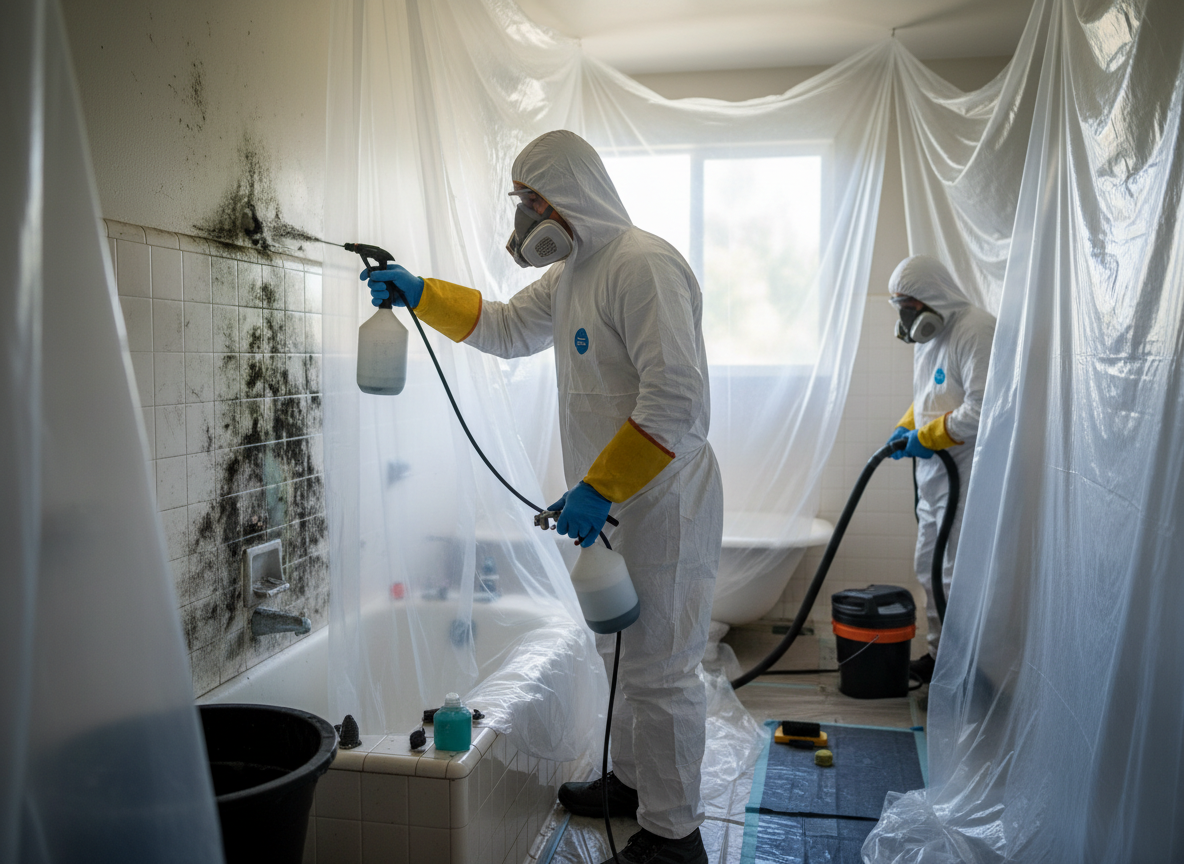
Bathrooms in North Hills East and North Hills West often develop mold where older tile grout meets shower pans installed decades ago. Steam from daily use combines with the dry summers that leave little natural drying, allowing colonies to spread behind walls and under vanities. Homes near Sepulveda Basin face extra moisture from basin-adjacent drainage patterns that keep crawl spaces and slab edges damp longer than inland blocks.
Removal starts with isolating the room to prevent spores from reaching living areas, then cutting out affected drywall or backer board without disturbing the rest of the structure. Technicians check adjacent rooms in typical North Hills ranch homes because plumbing runs often share walls with kitchens or laundry. After physical removal, surfaces receive antimicrobial treatment matched to the porous materials common in 1960s-1970s construction found throughout Granada Hills and Panorama City borders.
Final drying uses commercial air movers and dehumidifiers sized for the small footprint of a bathroom, followed by moisture readings on subfloor and studs to confirm levels match the surrounding Los Angeles basin climate. Homeowners receive a written report noting any ventilation upgrades needed, such as adding a properly ducted exhaust fan to combat the region’s low summer rainfall that reduces natural air exchange.
Technician insight
In North Hills, the thing that catches most people out with bathroom mold removal service is mold that has traveled along the shared plumbing chase into the next room, especially in 1960s homes west of North Hills Park where original cast-iron drains have settled and created small leaks that stay wet through the dry season.
Shower Pan Leak in North Hills West
Homeowner saw discoloration along the baseboard after heavy use. Inspection revealed water had wicked behind the shower pan into the subfloor. We removed the pan and surrounding drywall, treated the joists, and reinstalled with new waterproofing before handing the room back ready for tile.
How it works
- 1
Site Assessment
Technician inspects all bathroom surfaces, checks adjacent walls, and maps moisture with meters while noting construction details typical of North Hills housing stock.
- 2
Containment Setup
Plastic barriers and negative air machines isolate the bathroom from the rest of the home to keep spores from migrating into hallways or bedrooms.
- 3
Removal and Cleaning
Affected materials are removed, surfaces are scrubbed with appropriate solutions, and hidden cavities behind tubs or vanities are treated.
- 4
Drying and Verification
Equipment dries the space, followed by post-remediation moisture checks and a final walkthrough with the homeowner.
Pricing
Pricing varies by square footage affected, depth of hidden growth, and any needed drywall or tile replacement; we provide detailed upfront quotes after inspection.