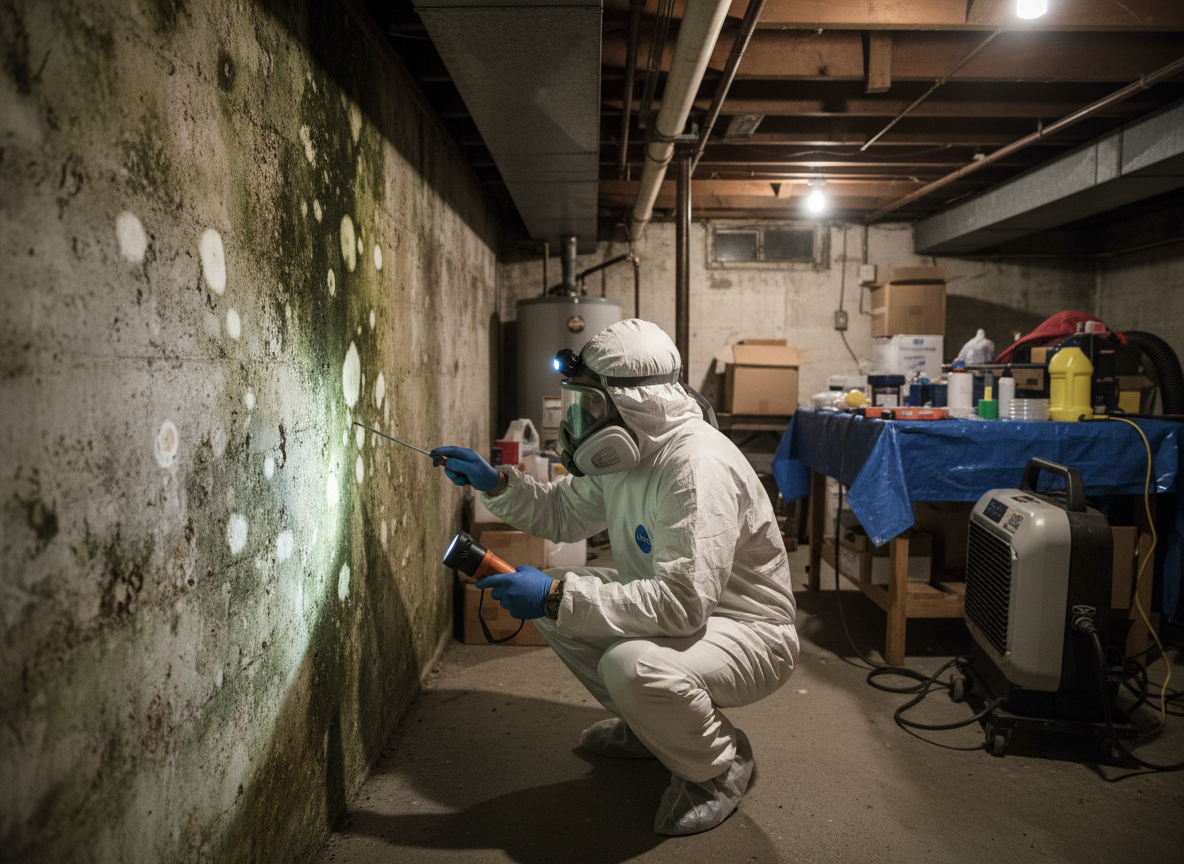
In North Hills, many homes built from the 1950s onward sit on raised foundations or have partial basements that trap moisture during the winter rains that follow the dry Mediterranean summers. Inspectors check concrete walls, sill plates, and HVAC ducts where condensation forms quickly once temperatures drop at night. Older stock in North Hills East and North Hills West often shows hidden growth behind insulation or under stairs where previous owners ran irrigation lines too close to the foundation.
Sepulveda Basin proximity means seasonal runoff and high water tables can push moisture through slab edges or crawlspace vents in Granada Hills and Panorama City homes. Technicians use moisture meters on drywall, wood joists, and subflooring while noting any musty odors that travel through shared walls in attached garages. Los Angeles county building codes require proper ventilation in below-grade spaces, yet many properties still rely on single small vents that fail during humid stretches after rain.
Edge cases include mold on fiberglass batts in finished basements converted during the 1980s boom and growth inside ductwork that serves both the basement and upper floors. Inspectors also examine sump pump pits and French drain terminations that homeowners near Van Nuys often extend without proper slope, creating standing water. Reports include photos, moisture readings, and clear next-step options before any remediation begins.
Technician insight
In North Hills, the thing that catches most people out with Basement mold inspection is irrigation overspray hitting the stucco and seeping into the stem wall on homes built before modern grading standards; the dry summers hide it until the first winter rain hits the Sepulveda Basin side of North Hills West.
Hidden Growth Behind Finished Wall
A homeowner in North Hills East noticed a musty smell after winter rains. Inspection found elevated moisture along the north foundation wall where a 1970s addition met the original slab. Growth had spread behind drywall into the insulation. The wall section was opened, affected materials removed, and the area dried before any finishes were replaced.
How it works
- 1
Initial Walkthrough
Technician arrives at the North Hills address and reviews visible signs of water intrusion around the foundation and any recent rain events affecting the Sepulveda Basin area.
- 2
Moisture Mapping
Readings are taken on walls, floors, and wood framing using calibrated meters to locate active damp areas that dry summers can mask until winter.
- 3
Air and Surface Sampling
Samples are collected from basement air and suspect materials for lab analysis when growth is not obvious on the surface.
- 4
Report and Recommendations
Findings are compiled into a written report with photos and prioritized steps based on the specific construction details of the North Hills property.
Pricing
Upfront quotes provided after the inspection scope is confirmed on site.