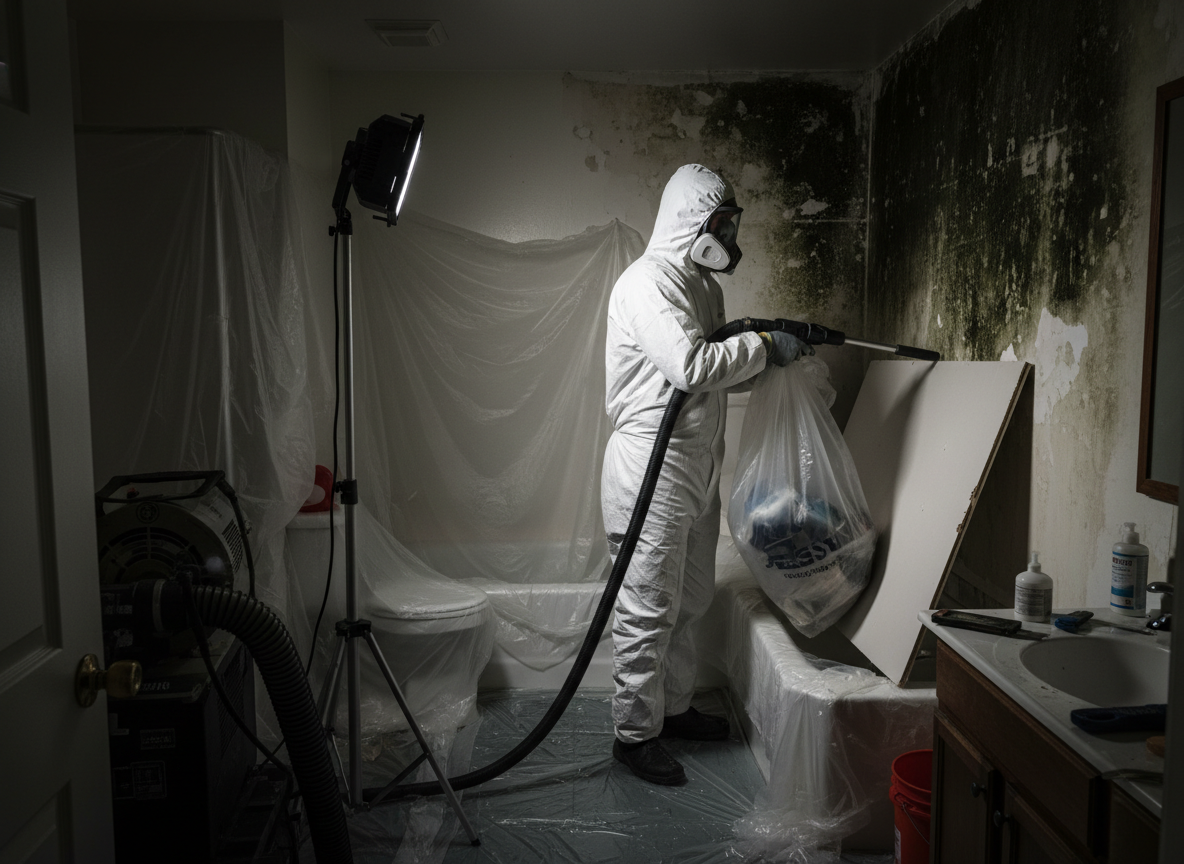
North Hills sits in a hot-summer Mediterranean climate where dry summers often hide moisture problems that surface after rare winter rains. Homes in North Hills East and North Hills West, many built mid-century with stucco and slab foundations, trap water around Sepulveda Basin edges when irrigation or roof leaks occur. Twenty-four hour mold removal starts with rapid assessment because spores spread quickly once humidity rises above normal dry-season levels. Technicians focus on hidden wall cavities and crawl spaces common in Panorama City and Granada Hills stock, where older HVAC systems circulate air across shared walls.
Containment protocols use physical barriers and negative air machines to keep spores from migrating into unaffected rooms during removal. Porous materials like drywall and carpet padding are cut out and bagged on site rather than treated in place. In Los Angeles County structures, technicians check for code-required ventilation upgrades when replacing sections near bathrooms or laundry areas. Edge cases include mold following slab leaks beneath North Hills Park homes, where soil moisture from the basin can wick upward through foundations for weeks before visible growth appears.
Homeowners often overlook HVAC ducts that run through attics in these neighborhoods; spores settle there and reactivate with the first temperature swing. Removal includes HEPA vacuuming and antimicrobial application on remaining surfaces, followed by moisture mapping to confirm drying before any rebuild work. The 15650 Nordhoff St base allows crews to reach North Hills West addresses within minutes at any hour, reducing the window for further spread during summer heat or sudden rain events.
Technician insight
In North Hills, the thing that catches most people out with 24 hour mold removal is how older slab foundations near Sepulveda Basin hold winter moisture through the entire dry summer, so what looks like a small bathroom stain turns into wall-cavity growth once the first heat wave hits.
Hidden Growth After Irrigation Leak
A North Hills West homeowner noticed a musty smell in the laundry room after a sprinkler line broke. Inspection revealed mold tracking up the slab edge into the wall cavity shared with the adjacent bedroom. Crews contained the space, removed the lower drywall and base plates, treated the concrete, and dried the area over two days. The homeowner was able to resume normal use without further spread into the rest of the house.
How it works
- 1
Emergency Assessment
Technician arrives within hours, inspects affected rooms, and maps moisture sources using meters.
- 2
Containment Setup
Plastic barriers and negative air pressure isolate the work zone to prevent spore migration.
- 3
Material Removal
Damaged drywall, insulation, and other porous items are cut out and disposed of off-site.
- 4
Cleaning and Drying
Remaining surfaces receive HEPA vacuuming and antimicrobial treatment followed by dehumidification.
- 5
Final Verification
Post-remediation inspection confirms moisture levels and air quality before clearance.
Pricing
Cost depends on square footage affected, depth of hidden growth, and whether HVAC cleaning is required; upfront quotes provided on site.